A Honeymoon Guide
Seven days along Italy's most vertical coastline — told one restaurant, one room, and one view at a time.
There is a specific kind of disappointment that happens on the Amalfi Coast. You arrive with a spreadsheet, a list from a blog, a vague idea that Positano is the one you've seen in photos. You discover too late that the restaurant you booked is a tourist trap. That the hotel upgraded you to a room with no view. That the boat to Capri leaves an hour earlier than you thought, and now you're in line behind a cruise ship.
I've spent years walking this coast — mornings at Da Adolfo, afternoons in Ravello's gardens, evenings watching the light leave Positano from the same terrace at Franco's Bar. I've stayed in nearly every hotel worth staying in. I've learned which tables at Le Sirenuse get the view, which days the ferries actually run on time, and which room at Il San Pietro is the only one you should accept.
This guide is the result. It is not a list of everything. It is a week, hour by hour, in the exact order that made my own honeymoon quietly perfect for the couples I've sent since. Read it in the morning with your coffee. Print the map. Show up and trust the plan.
Michael
Aisle to Away
Seven days, five principles, three hotels, fourteen restaurants. In the order you'll live them.
01
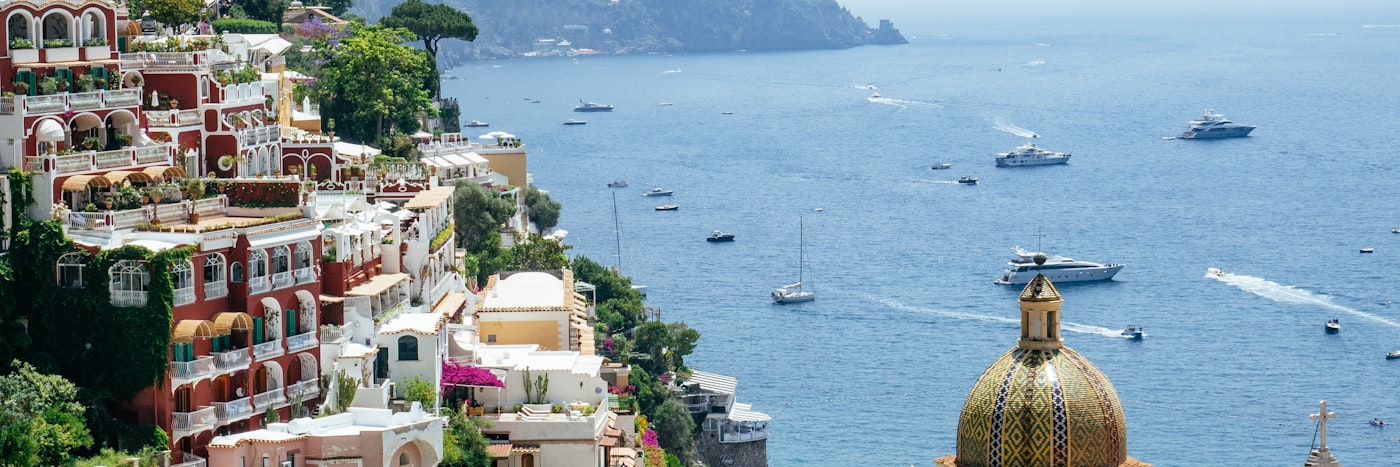
Amalfi is a working port with cruise-ship day crowds. Positano is the one from the postcards — vertical, quiet after dark, and built for slow mornings.
02
One reservation a day, made three weeks out, for the view or the dish you came for. The rest should be stumbled into.
03
SITA buses can take ninety minutes to reach Amalfi town. The ferry from Positano takes twenty-five, and it's a better view.
04
August is heat and crowds. The two shoulder weeks are warm water, empty beaches, and restaurants that still remember your name.
05
The coast is built on stairs. Pack something you can walk a thousand steps in — then pack nicer shoes for dinner, and carry them.
06
The road is a single lane with a thousand buses on it. Use drivers, ferries, and your feet. Every hotel has a number.
Between Positano & Praiano
A private transfer, the first view of the coast from above Vietri, and a dinner at Max with the windows open.
Land at Naples Capodichino. Skip the train and the rental car. We book a private transfer with Raffaele — the driver we've used for seven years — who meets you in baggage claim with a sign and a bottle of still water. Ninety minutes, air-conditioned, through tunnels and then suddenly the first view, above Vietri sul Mare, where the coast opens up for the first time. Ask him to pull over at Belvedere della Madonna di Positano. He knows.
Arrive in Positano between 3 and 4 PM. Your hotel's porter will meet the car at the top of town — no car can drive the last stretch. The walk down feels long the first time. It won't again.
Don't unpack. Put on swim things and walk down to Spiaggia Grande, the main beach, before the light goes. The black sand is hot; the water is cold for ten seconds and then perfect. Stay an hour. Order a spritz at Chez Black and sit in the red chairs facing the water. Do not pay extra for an umbrella bed unless you mean to stay all day — the free strip at the far right is fine.
Back to the hotel by 6. Shower, change into something you can walk in.
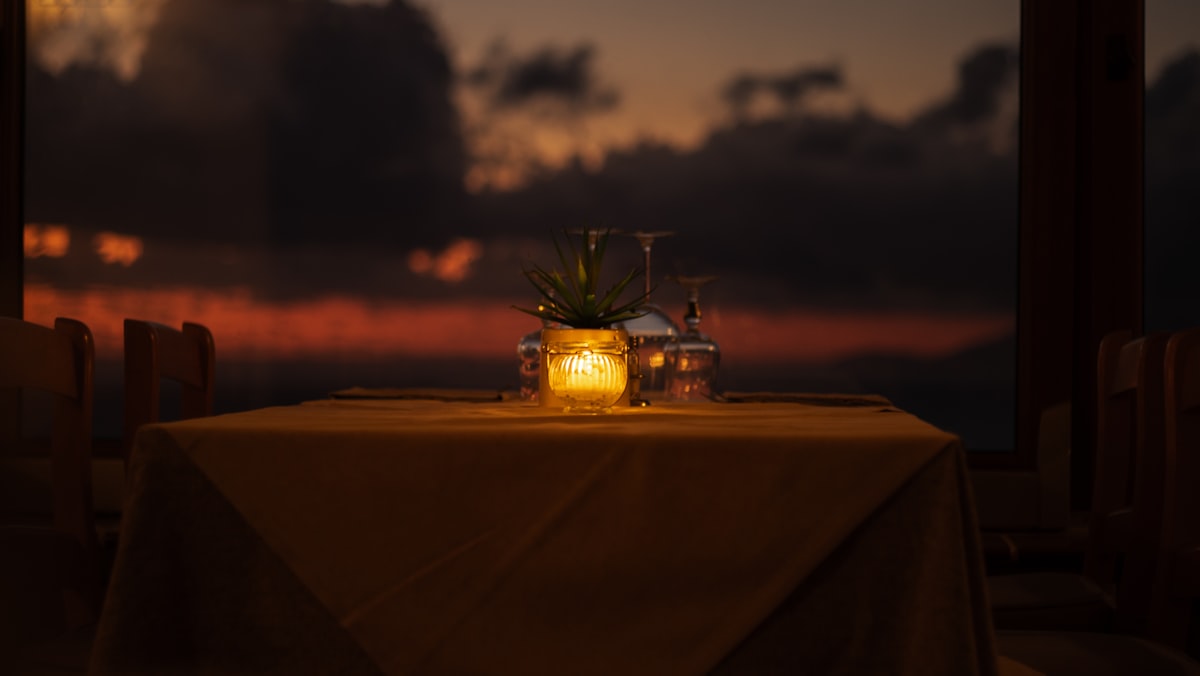
Dinner at Ristorante Max, 8:30 PM, the upstairs room. We book three weeks out. Order the scialatielli ai frutti di mare — the pasta is made that morning, the seafood came in that afternoon, and this is the dish that sets the register for the week. Split a bottle of Falanghina from Campi Flegrei. Walk home slowly through the empty upper streets. If you still have energy, end at Music on the Rocks for one drink and then go to bed.
The Amalfi Coast is not a place you visit once. It is a place that rearranges what you want from a week.
Sarah & James · September 2025
The whole point of the coast: a day where you do almost nothing, in exactly the right order.
Coffee at Bar Bruno (not Caffe Positano, not the one by the church — the other Bruno, two streets up). Cornetto and espresso at the counter, standing, like a local. Walk up the vertical streets toward the mountain. Duck into the lemon-laden tile shops. Spend fifteen minutes doing nothing. Notice that's the whole instruction.
11:30 AM on the beach, past Music on the Rocks, there is a small wooden pier with a boat flying a red flag. This is the shuttle to Da Adolfo — a restaurant on a cove reachable only by water. Ten minutes across, no reservation, a handwritten menu, and grilled mozzarella on lemon leaves that tastes like it was invented for this meal. Order the fritto misto. Drink the house white. Swim between courses if you want to. The boat goes back every hour.
Back by 3. The afternoon is for your hotel pool and a book you won't finish. This is not a failure of planning. This is the plan.
Aperitivo at Franco's Bar, at the top of Le Sirenuse, 6:45 PM sharp so you catch the last light. Split the negroni and the view. Dinner at Next2, 8:30, the terrace. Order the vegetable tasting (yes — trust us) and whatever pasta the waiter recommends.
Aperitivo — Franco's Bar, Positano
A driver up the hill before the buses, two villas, one of the best lunches of the trip.
Leave at 9. The tour buses arrive at 10:30. Villa Rufolo's gardens are small enough that if you are the first people through the gate, you will have the view of the coast from the gardens entirely to yourselves for thirty minutes. Wagner wrote part of Parsifal here. You will understand why.
Lunch at Rossellini's, the Michelin-starred dining room at Hotel Palazzo Avino. The tasting menu is long and worth it — ask for the terrace table if the weather holds. Two hours, minimum. The wine pairing is extravagant and we allow it.
After lunch, walk through Ravello's small square to Villa Cimbrone. At the end of a cypress path is the Terrace of Infinity — a marble balustrade with eighteen white busts staring into the Tyrrhenian. Gore Vidal lived just below. He called this the most beautiful view in the world, and he was right.
A summary of the second half — each day gets its own chapter, the same way the first three do.
Early ferry. Blue Grotto before the line. Hike to Villa Jovis, Tiberius's cliff-edge palace, where almost no one goes. Lunch at Il Riccio, beach club above the Blue Grotto. Gelato in the Piazzetta. Last ferry home.
Taxi to Bomerano, walk four hours along a cliff trail that ends in Nocelle, then 1,700 steps down to Positano. Finish with lemon granita at the cafe at the bottom of the stairs. Hotel pool for the rest of the afternoon.
Ferry to Amalfi town. Paper museum for forty-five minutes. Walk fifteen minutes over the headland to Atrani — a village so small it has one square and one clock. Lunch at A'Paranza. Ferry back by 4. Dinner at La Sponda (Le Sirenuse's restaurant) — the 400-candle room.
Charter a gozzo (the classic wooden boat) for four hours. Swim stops at Li Galli, the Green Grotto at Conca dei Marini, and a long slow lunch on board — the captain cooks. Back by 3. Pack. Last dinner at Max. Car at 9 AM in the morning to Naples.
Il San Pietro · Positano
Featured Hotel
A cliff-built property five minutes south of town. The only hotel on the coast that genuinely feels like someone's beautiful home.
Nights
Six of seven
Room
Deluxe Sea View, 2nd floor
Rate
€1,450–1,800 / night
Season
May 1 — October 31
Request Room 212. It's the same rate as the standard sea view but has a second private terrace that wraps the corner. The breakfast on that terrace is the quiet center of the trip.
Eat at Zass once (the Michelin-starred room), but otherwise take the path down to Carlino, the hotel's beach club, for long lunches.
What we'd skip: the spa. It's fine — but in a town like Positano, time spent indoors is time lost.
The Featured Table
Reachable only by a wooden boat with a red flag. A handwritten menu. The single most specific meal on the coast.
Adolfo is no longer with us; his grandchildren now run the place. The format hasn't changed in forty years. A wooden boat with a red flag leaves Positano's main pier on the half-hour from 10:30 to 12:30. Ten minutes later you are in a cove with a restaurant at the back of the beach. No reservations; you queue for a table and then you sit in the shade and you order.
The dish is mozzarella grilled on lemon leaves. The wine is a chilled house white in unlabelled bottles. You swim between the antipasto and the fritto misto. The bill is the cheapest restaurant on the coast and it is the meal you will describe first when you get home.
01 — Golden Hour
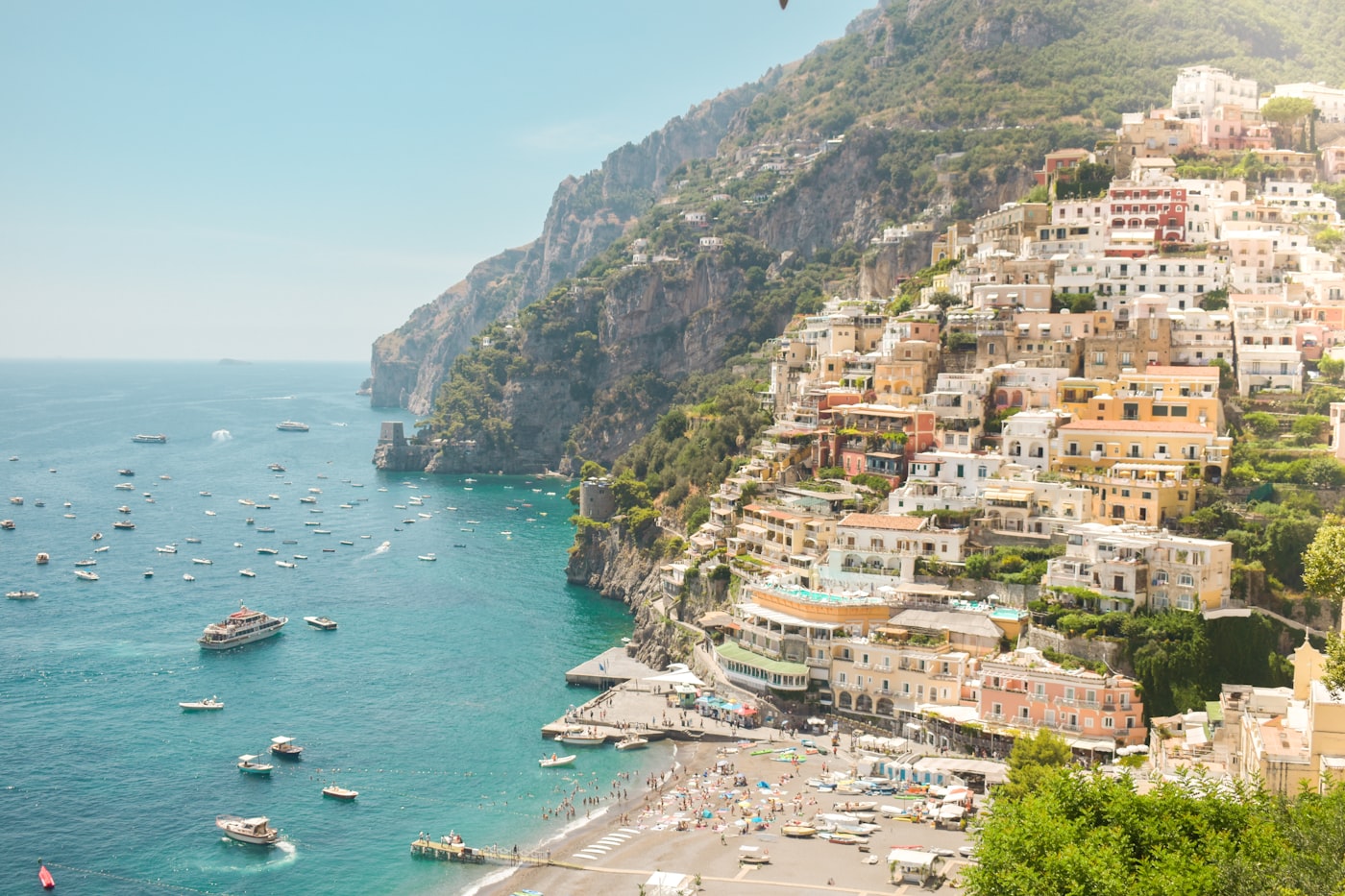
The first view of Positano from above, right before the road descends into town. The only place to capture the full vertical of the village.
40.6285° N, 14.4881° E · 45 min before sunset
02 — Blue Hour
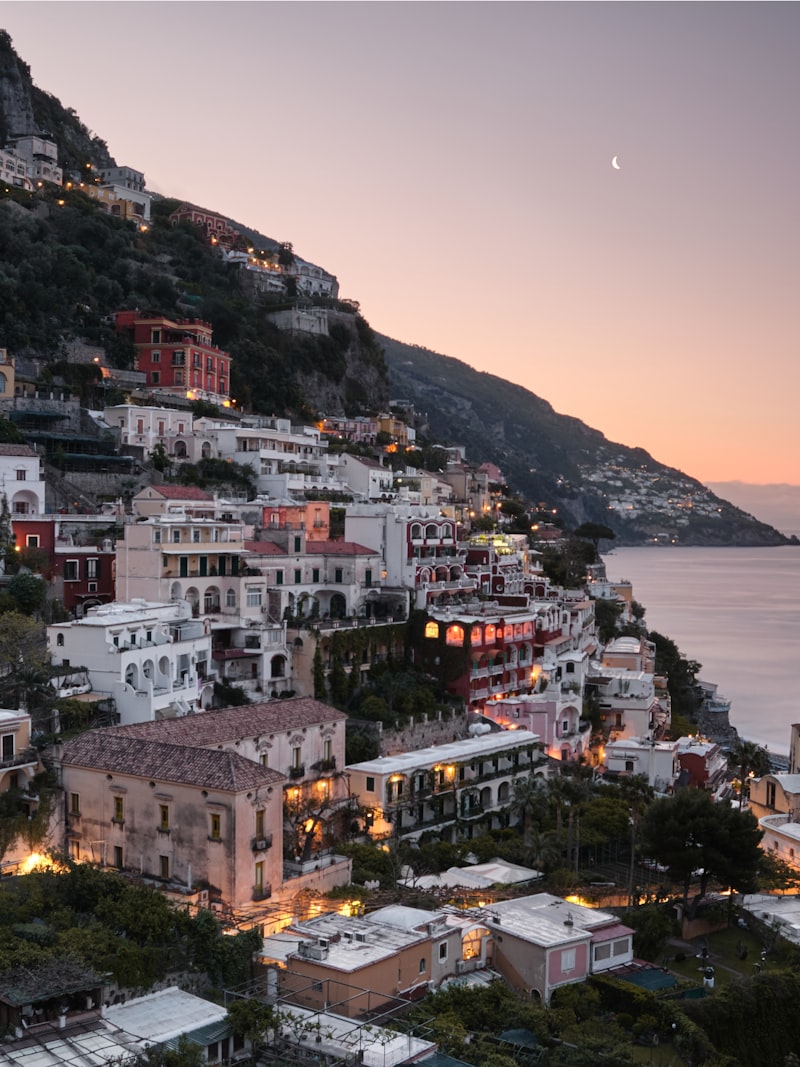
Twenty minutes after sunset. The lights come on across the cliff face. Long-exposure territory.
40.6283° N, 14.4865° E · 20 min after sunset
03 — Morning
Before 10 AM you may have this to yourselves. Shoot wide; the frame needs the full horizon.
40.6461° N, 14.6133° E · 9:00–10:00 AM
04 — Midday
The walking path from Positano to Fornillo gives you the unmarked postcard angle.
40.6275° N, 14.4820° E · 12:00–14:00
05 — Late Afternoon
4 PM, almost empty, a thousand-foot drop, and the Faraglioni sea stacks in the mid-distance.
40.5585° N, 14.2593° E · 15:30–17:00
06 — Evening
Arrive at 6:45; the sun falls behind the mountain at 7:12 (in May). A negroni in frame is traditional.
40.6300° N, 14.4862° E · 18:45–19:15
The Full Plan
This sample shows three full days, one featured hotel, and a summary of what's in the complete guide. The full edition includes hour-by-hour itineraries for all seven days, three hotel deep-dives, fourteen restaurants with reservation links, eight photo spots with exact coordinates, and a Google Map of every pin.
Get the Plan — $39Instant download · Lifetime updates · 7-day refund